
Fillers · July 19, 2026 · 6 min · By Kendrick Sato
Biostimulator fillers for the jawline: how Sculptra and Radiesse differ from HA
Collagen-stimulating fillers build the jaw slowly and last longer than hyaluronic acid. What they do, and the one trade-off to weigh.
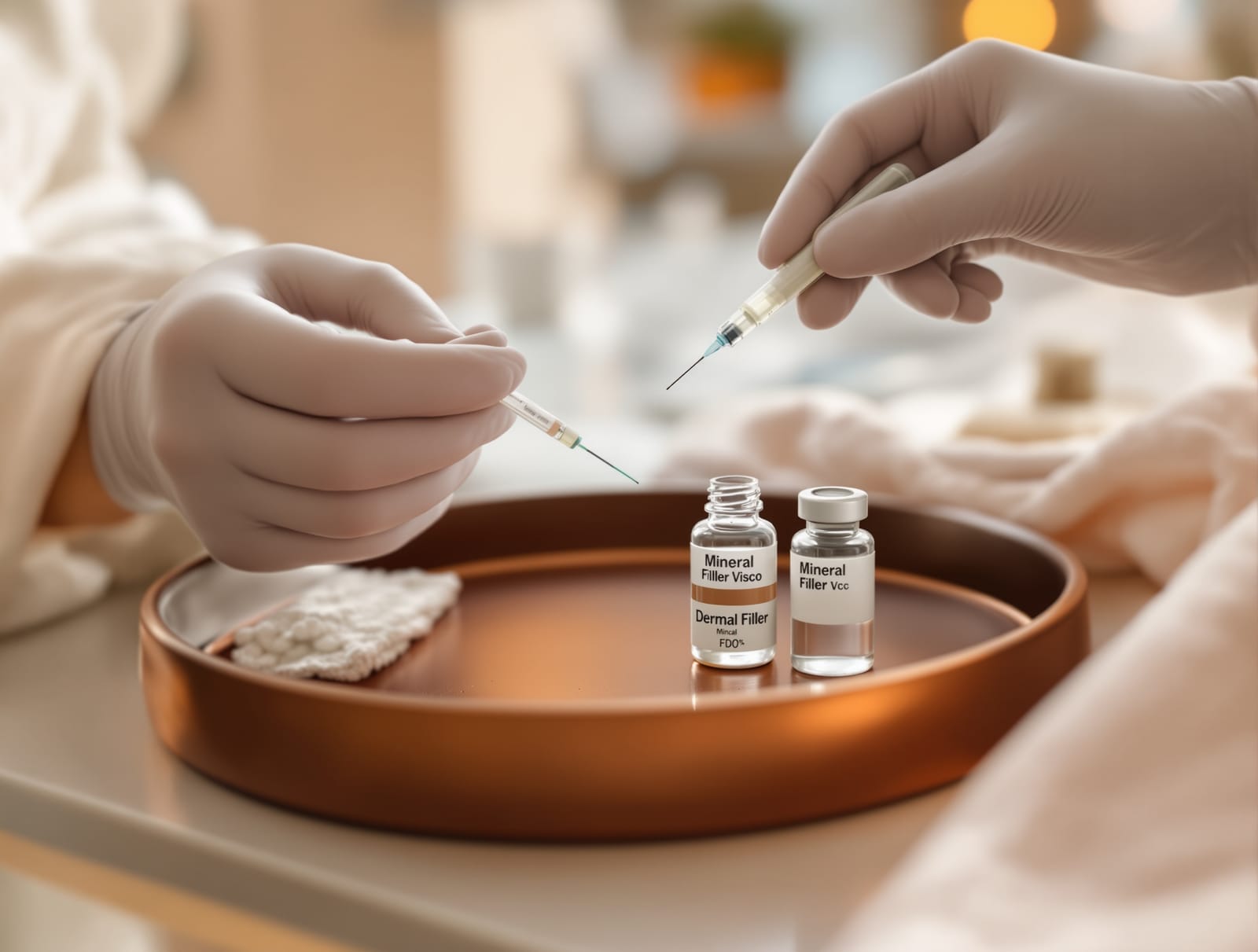
Almost every conversation about jawline filler assumes hyaluronic acid, the soft, adjustable gel that adds volume the moment it is injected. But a second family of fillers works on the jaw in a completely different way, and it is worth understanding before you decide what to put along your mandible. Biostimulatory fillers do not just sit there as volume. They provoke your own body to lay down new collagen, so the result builds slowly and, in exchange, tends to last considerably longer. The two you will hear named most often are Sculptra and Radiesse.
The mechanism is the interesting part. Where hyaluronic acid is essentially a cushion that occupies space, a biostimulator acts more like a prompt. Sculptra is poly-L-lactic acid (PLLA), a biodegradable polymer that triggers a controlled, low-grade healing response; over weeks the particles are broken down while fibroblasts are nudged into producing fresh type I collagen. A review of PLLA in facial aesthetics describes exactly this neocollagenesis, and a systematic review in the journal Polymers reports high satisfaction with effects that hold well beyond the life of a hyaluronic acid gel. Radiesse is calcium hydroxylapatite (CaHA), a filler made of tiny mineral microspheres suspended in a gel; it does two things at once, adding immediate volume like a traditional filler while the microspheres scaffold new collagen over the following months. Both are FDA-approved dermal fillers, used off the beaten path of standard HA for the right candidate.
Sculptra versus Radiesse: two different biostimulators
The practical difference between them comes down to timing and firmness. Sculptra gives you almost nothing on the day of treatment beyond a little swelling that fades, because its whole effect is the collagen that appears gradually. It is typically done as a small series of sessions spaced weeks apart, and the jaw firms up over two to three months. That makes it excellent for restoring broad, diffuse volume and skin quality across the lower face, but poor for anyone wanting to see a sharper line the same afternoon. Radiesse behaves more like a bridge between the two worlds: you get visible structure right away because the gel carrier fills, and then the calcium microspheres extend the result as collagen forms. Its firmness also gives real lift along the jaw body and angle, which is why some injectors reach for it when they want structural support rather than a soft contour.
The trade-off nobody mentions: no easy eraser
Here is the catch that matters most, and the reason first-time patients are usually steered toward hyaluronic acid. Biostimulators are not reversible the way HA is. There is no enzyme that dissolves them on demand. If a hyaluronic acid result reads too heavy or drifts out of place, it can be dissolved with hyaluronidase within days, a genuine safety net. With Sculptra or Radiesse, a poorly placed or overdone result generally has to be waited out as the material and the collagen it created slowly resolve over a year or more. That single fact raises the stakes on injector skill and conservative dosing, and it is why these products reward experience and punish bargain hunting.
Where biostimulators fit on the jawline
Given all that, the honest positioning is this. Biostimulators shine when the goal is overall firmness, gradual volume restoration, and better skin quality across a softening lower face, especially in people whose jawline has thinned with age rather than never been defined. They are less suited to the precise, on-bone edge work that a firm hyaluronic acid or an implant delivers, so a genuinely recessed chin or a crisp angle is often still an HA job. Many injectors combine tools, using a biostimulator to rebuild the foundation and a small amount of HA to define the border, which is also why an assessment matters more than a product name.
Cost and longevity follow the mechanism. Biostimulators usually cost more per session and may need a short series, but because they last longer, the maintenance rhythm is gentler than the twelve-to-eighteen-month cycle typical of HA; we lay out that math in what jawline filler costs and how long it lasts and the broader timelines in how long jawline enhancement lasts.
The takeaway is simple. If you want an adjustable, reversible, same-day result, hyaluronic acid remains the sensible first choice for the jaw. If you want slow-built, longer-lasting firmness and volume and you are working with an experienced injector you trust, a biostimulator can be a powerful option, as long as you go in knowing there is no undo button. Match the tool to your goal, not to the trend, and let a skilled provider tell you which your face actually needs.
Related reading: Jawline filler for non-surgical definition.